Restaurant interior design is about far more than choosing colours, furniture, and wall finishes. A well-designed restaurant should look good, feel comfortable, support smooth service, and help the business run properly every day.
For restaurants in Nepal, particularly in Kathmandu, Pokhara, Chitwan, and other growing hospitality markets, customers now evaluate the full dining experience. Food remains the primary reason people visit, but the layout, lighting, seating, ambience, and overall feeling of the space directly affect how long they stay, how often they return, and whether they recommend the place to others.
This is why interior design for restaurant spaces must start with planning, not decoration. The best restaurant interiors are not only beautiful. They are practical, comfortable, easy to operate, and aligned with the brand.
Whether you are opening a cafe, family restaurant, rooftop dining space, fine dining restaurant, bar, lounge, or hotel restaurant, the design should support both the customer experience and the business goal.
Table of Contents
Why Interior Design for Restaurant Spaces Matters in Nepal
The restaurant and hospitality market in Nepal has become more competitive. Customers have more choices than before, and many people now select restaurants based on the full experience, not just the menu.
A well-considered restaurant interior creates a strong first impression. It makes customers feel welcome, comfortable, and interested in the space. It also helps people remember the brand and share their experience with others.
In many cases, customers decide how they feel about a restaurant within the first few minutes of entering. The entrance, lighting, seating, smell, sound, and visual style all shape that first impression.
Good interior design for restaurant operations also supports daily business. If the layout is confusing, staff movement is difficult, or tables are placed too close together, the restaurant may look good in photos but become hard to run. A restaurant must work well for both customers and staff.
That is why restaurant interior design in Nepal should focus on three things together: visual appeal, customer comfort, and business function.
Start With the Restaurant Concept and Brand
Before planning furniture, lighting, or finishes, the restaurant concept must be clear. A fine dining restaurant, cafe, family restaurant, rooftop bar, fast casual restaurant, and hotel dining area all require different design approaches.
A cafe may need a warm, relaxed, and flexible layout where people can sit casually, work for a while, or meet friends. A family restaurant may need larger tables, comfortable seating, easy movement, and a practical layout for groups. A fine dining restaurant needs more privacy, better spacing, softer lighting, and a more refined atmosphere.
A rooftop restaurant or bar may need to focus on views, lighting, music, seating zones, and evening ambience. A hotel restaurant may need to serve different types of guests throughout the day, from breakfast to dinner, so the space has to be flexible and easy to manage.
The interior should match the restaurant's identity. If the concept is modern and casual, the design should feel open and approachable. If the concept is premium, the materials, lighting, furniture, and layout should feel more considered and polished.
A strong concept guides every design decision. Without it, the restaurant can feel unclear or like a copy of different styles pulled together without purpose.
Plan the Layout Before the Decoration
One of the most common mistakes in restaurant design is focusing on decoration before layout. A restaurant may look attractive, but if the layout does not work, the space will create problems every single day.
The layout determines how customers enter, where they wait, how they move, where they sit, how staff serve, how food moves from the kitchen, and how people leave after dining. These things need to be resolved before selecting wall finishes or furniture styles.
A good restaurant layout should make the space feel easy to understand. Customers should know where to enter, where to sit, where the counter or reception is, and how to reach the washroom without confusion.
Staff should also be able to move smoothly between the kitchen, service areas, dining tables, and billing area. If staff have to take long or awkward routes, service becomes slower and more stressful.
The layout should also match the size of the space. A compact restaurant needs smart planning so it does not feel crowded. A larger restaurant needs proper zoning so it does not feel empty or disconnected.
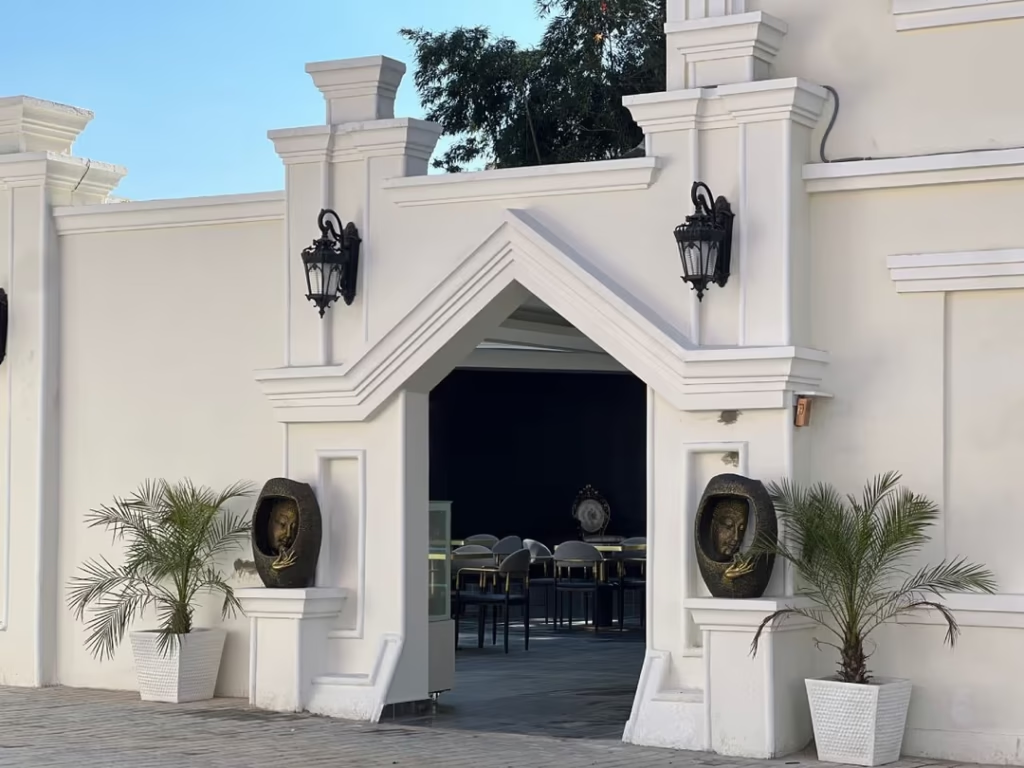
Swoorna Kara, a fine dining restaurant in Baluwatar, Kathmandu designed by RG Creations Nepal, illustrates this well. Across 5,500 square feet and two floors plus a garden, the design had to serve multiple types of guests simultaneously: families dining in open areas, business professionals requiring privacy, and guests using the outdoor garden. The layout challenge was creating separation between these zones without making the space feel divided or cold. The solution was strategic layout planning with decorative acoustic partitions that maintained an open and welcoming atmosphere while giving private spaces genuine privacy.
Good layout planning improves both the customer experience and staff efficiency. Without it, even a visually impressive restaurant becomes difficult to operate.
Customer Flow: How People Move Through the Space
Customer flow describes how people move through the restaurant from the moment they arrive until they leave: entering, waiting, ordering, sitting, dining, paying, and exiting.
In a well-designed restaurant, this movement feels natural. Customers should not feel blocked, confused, or uncomfortable at any point. There should be enough space between tables, clear walking paths, and easy access to important areas like the washroom, counter, or waiting zone.
Customer flow is especially important during busy periods. If the entrance is too tight, the waiting area is poorly planned, or the seating arrangement blocks movement, the restaurant can feel crowded even if it is not at full capacity.
Staff flow is equally important. Waiters should be able to serve tables without disturbing other customers. Food should move from the kitchen to the dining area quickly and safely. Used dishes should also return to the service area without crossing awkwardly through customer paths.
When both flows are planned properly, the restaurant feels more comfortable and performs better during peak hours.
Balance Seating Capacity and Comfort
Restaurant owners often want to fit as many seats as possible into the space. This is understandable because more seats can mean more revenue. But too many seats reduces comfort and damages the customer experience.
If tables are too close, customers feel uncomfortable and conversations feel exposed. Staff struggle to serve properly. The restaurant becomes noisy and difficult to move around.
The goal is not always maximum seats. The goal is the right balance between capacity, comfort, service flow, and the type of restaurant.
A cafe can often use smaller tables and flexible seating. A family restaurant may need larger tables and more open movement. A fine dining space needs more distance between tables for privacy and comfort. A bar or lounge may need a mix of high tables, sofa seating, and group areas.
At Swoorna Kara, the design accommodates more than 200 guests across its dining hall, private VIP rooms, and outdoor garden seating area. Rather than filling every square metre with tables, the space is zoned so different types of guests have appropriate settings. VIP rooms serve intimate business lunches and private gatherings. The garden area offers a relaxed outdoor experience. The main dining hall supports larger family groups. Each zone has its own seating character while connecting to a unified interior theme.
Seating planning should support the business model, not simply fill the floor.
Lighting and Ambience in Restaurant Interior Design
Lighting has one of the largest impacts on how a restaurant feels. It affects the mood, the comfort level, the appearance of food, and the overall experience of the space.
Harsh lighting makes a restaurant feel cold or clinical. Poor lighting makes the space feel dull and unfinished. The right lighting creates warmth, focus, and atmosphere appropriate to the time of day and the restaurant concept.
During the day, natural light makes a restaurant feel fresh and welcoming. In the evening, warmer lighting creates a more relaxed and comfortable mood. Different areas need different types of lighting. Dining areas need soft and pleasant lighting. Counters, kitchens, and service areas need practical task lighting. Feature or decorative lighting adds character but should never be used purely for appearance at the expense of comfort.
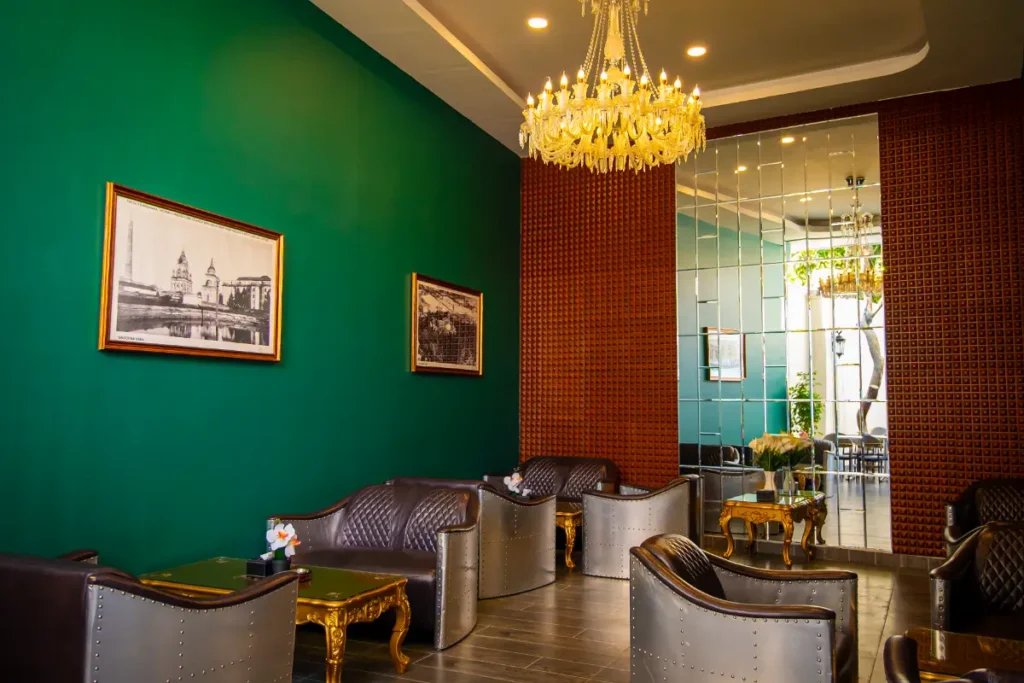
At Swoorna Kara, custom ambient lighting was designed specifically to allow the restaurant to transition from a bright lunch venue into an intimate dinner setting. This was not achieved through a single lighting setup. It required planning at the design stage so the lighting system could shift the mood seamlessly as the evening progressed. Warm wood finishes throughout the space work together with the lighting to reinforce this transition.
For restaurants in Nepal, lighting is also commercially relevant to social media visibility. Customers regularly photograph food, interiors, and group moments. Good lighting makes the space more shareable. However, the design should not be engineered purely for photos. If the lighting looks good in images but feels uncomfortable in person, customers will not return.
The best lighting design feels natural, comfortable, and connected to the restaurant concept.
Choose Materials That Handle Daily Use
Restaurant interiors need to look good, but they also need to withstand daily use. A restaurant is a high-traffic environment. Floors, tables, chairs, counters, walls, and washrooms are used constantly, often across multiple service periods each day.
Material selection is therefore as important as aesthetic selection.
Flooring should be durable and easy to clean. Furniture must be strong enough for daily use without deteriorating quickly. Wall finishes should resist damage from cleaning, humidity, and contact. Tables should be stable and suitable for food service. Washroom materials need to be easy to maintain over time.
In Nepal specifically, material choices must account for monsoon humidity, dust, cleaning requirements, and longer-term maintenance access. Some materials that look strong in a showroom perform poorly in a humid environment or require specialist maintenance that is not practical in Kathmandu. Others may cost more initially but perform better and require less ongoing intervention.
At Swoorna Kara, warm wood finishes were selected not only for their visual warmth but for how they hold up in a hospitality environment. The project also incorporated energy-efficient kitchen ventilation systems, LED mood lighting throughout the venue, and water recycling systems for garden maintenance. These decisions reflect long-term operational planning, not just design aesthetics.
Restaurant owners should evaluate long-term value, not just the first cost. Choosing the cheapest material often leads to repair, replacement, or maintenance problems within the first two years of operation.
A professional interior design company in Nepal can help select materials that match the look of the restaurant while also meeting the practical demands of daily use in the local environment.
Plan the Kitchen and Service Areas Properly
A restaurant may look exceptional from the dining area, but if the kitchen and service areas are poorly planned, the business becomes difficult to run at volume.
Kitchen placement, food movement, dish return, storage, staff access, ventilation, and service flow all require proper planning. These areas are not visible to customers in most cases, but they directly affect the customer experience through service speed, food quality, and staff performance.
If the kitchen is too far from the dining area, service slows. If the service route is blocked, staff struggle during peak hours. If ventilation is insufficient, heat, smell, and cooking fumes affect the dining area. This is a particularly important consideration in Nepal, where restaurants often operate with limited natural cross-ventilation and must plan mechanical systems carefully. If storage is not considered in the layout, the restaurant becomes disorganised and harder to manage under pressure.
At Swoorna Kara, a professional commercial kitchen layout was integrated as a core part of the design process, not added as an afterthought. The kitchen was planned to support a 200-plus capacity restaurant operating across lunch and dinner services, with the service flow connecting back-of-house to the multiple dining zones across two floors.
Good interior design for restaurant spaces connects the front-of-house and back-of-house from the beginning. This is why restaurant design should never be treated as decoration alone. It must support real daily operations.
Interior Design and Architecture Should Work Together
For restaurant projects, interior design and architecture must be coordinated from the beginning of the project, not resolved separately at different stages.
Ceiling design, lighting layout, kitchen exhaust, plumbing, electrical points, air conditioning, washrooms, storage, and structural constraints all affect the final interior outcome. If these are not planned together early, the project will require changes during construction or finishing, which costs more, takes longer, and often results in compromises that affect the final quality.
For example, lighting placement depends on ceiling design and electrical planning. Kitchen layout depends on plumbing, exhaust, and service flow. Furniture placement depends on space planning and circulation decisions. Washroom location affects both customer comfort and technical service routing.
This is why architectural and interior design should not be treated as separate workstreams. When architecture, construction, and interiors are planned together from the start, the final result is more practical, better executed, and easier to manage through the construction phase.
For restaurant owners in Nepal, this approach can reduce rework, save time, and produce a better-finished space.
Design for Customer Experience, Not Just Social Media
A restaurant that looks good in photos can attract initial attention, particularly on social media and food discovery platforms. But the design should not be built only for visual content. It also needs to feel comfortable, practical, and genuine in real life.
Photo-friendly moments, feature walls, branded details, and good lighting can help people remember and share the restaurant. But if the seating is uncomfortable, the lighting is too dramatic, the space feels staged, or the layout makes customers feel like extras in a set rather than guests in a restaurant, the experience suffers.
A good restaurant interior balances visual impact with real comfort. It should have moments that feel memorable without feeling manufactured.
The design should also fit the brand honestly. A small neighbourhood cafe does not need to look like a luxury hotel. A fine dining restaurant should not feel like a casual outlet. A family restaurant should not be so design-heavy that it becomes uncomfortable for groups with children.
The best restaurant interiors feel natural, useful, and memorable at the same time.
Common Interior Design Mistakes to Avoid
Restaurant owners can avoid many problems by planning properly from the start. The most common mistakes include:
• Choosing decoration before establishing the layout
• Trying to fit more tables than the space comfortably supports
• Ignoring staff movement and service flow during the design phase
• Using lighting that does not match the concept or time of day
• Not planning ventilation adequately, particularly for Nepal's climate and monsoon season
• Choosing materials that are difficult to clean or do not perform well under humidity
• Placing washrooms in awkward or uncomfortable locations
• Replicating a design that does not fit the actual space or concept
• Not planning electrical, plumbing, and kitchen requirements early in the project
• Forgetting about storage and service area needs
• Using furniture that looks good but becomes uncomfortable after thirty minutes
• Treating interior design as separate from architecture and construction
Avoiding these mistakes makes the restaurant easier to operate and more enjoyable for customers across its entire lifespan, not just in the first few weeks after opening.
Why Work With a Professional Interior Design Company in Nepal?
A professional interior design company in Nepal can help restaurant owners plan the project properly from the start. This is especially valuable for owners investing in a new restaurant, renovating an existing space, or expanding into a larger hospitality project.
A professional team can support concept planning, layout design, customer flow, furniture selection, lighting, material selection, kitchen coordination, site execution, and final finishing.
This does not only improve how the restaurant looks. It improves how the space works every day.
For restaurants, cafes, bars, lounges, and hotel dining areas, the right design team connects business goals with practical design decisions. This includes how many people the space can hold comfortably, how staff will move, how the restaurant will feel across different times of day, and how the final space will support the brand.
Working with a team that understands both interior design and architecture also reduces confusion during construction. When design, structure, services, furniture, and finishing are planned together, the project becomes more manageable and the outcome more consistent.
How RG Creations Nepal Can Help With Restaurant Interior Design
RG Creations Nepal works across architecture, interior design, engineering, construction, furniture supply, and project management. This makes the company a capable partner for restaurant and hospitality projects that require more than surface decoration.
Swoorna Kara in Baluwatar, Kathmandu is RG Creations Nepal's completed fine dining restaurant project and demonstrates this approach in practice. The 5,500 square foot, two-floor-plus-garden restaurant was designed to serve families, business professionals, and private groups within a single space. Key design decisions included:
• A zoned layout using decorative acoustic partitions to create privacy for business meetings without closing off the open family dining atmosphere
• Warm wood finishes and custom lighting fixtures designed to transition the venue from a bright lunch setting to an intimate dinner environment
• Private VIP rooms for business lunches and intimate gatherings
• Outdoor garden seating area with water recycling systems for garden maintenance
• A professional commercial kitchen layout supporting 200-plus capacity across lunch and dinner services
• Energy-efficient kitchen ventilation systems and LED mood lighting throughout
The project demonstrates that restaurant interior design requires every element, including layout, lighting, materials, kitchen planning, service flow, and finishing quality, to work together from the beginning.
RG Creations Nepal's broader experience across premium hospitality, event venues, commercial spaces, and interior projects gives the team a strong understanding of how design and execution need to connect to deliver a space that operates well long after the opening.
Whether you are planning a cafe, restaurant, rooftop dining space, bar, lounge, or hotel restaurant, RG Creations Nepal can support layout planning, interior design, construction coordination, furniture, and final handover.
Final Checklist Before Designing a Restaurant Interior
Before starting a restaurant interior project, use this checklist to plan the main details.
| What to Plan | Why It Matters |
| Restaurant concept | Sets the overall design direction |
| Brand identity | Helps the space feel distinctive and memorable |
| Layout | Affects comfort, movement, and service efficiency |
| Seating capacity | Impacts revenue and customer comfort balance |
| Customer flow | Helps people move easily without confusion |
| Staff movement | Improves daily service operations |
| Lighting | Creates mood, ambience, and visual comfort |
| Materials | Affects durability, maintenance, and appearance over time |
| Kitchen coordination | Supports smooth service from back-of-house to front |
| Ventilation | Critical for comfort, particularly in Nepal's climate |
| Furniture | Affects both comfort and the overall design feel |
| Project execution | Ensures the design is built to the intended standard |
A good restaurant interior should not only impress customers when they enter. It should make them feel comfortable, help staff work better, and support the business every day.
Planning a Restaurant or Hospitality Project in Nepal?
If you are planning a restaurant, cafe, hotel dining area, rooftop space, bar, lounge, or hospitality project in Nepal, the quality of the design and execution will directly affect how the business performs.
RG Creations Nepal can help with layout planning, interior design, architecture, construction coordination, furniture supply, project management, and final finishing.
Speak with RG Creations Nepal to discuss your restaurant concept, space requirements, layout, customer flow, and complete interior design needs.
Frequently Asked Questions (FAQ)
What is the most important factor in interior design for a restaurant?
Layout is the most critical factor. Without a properly planned layout, even a visually impressive restaurant will create daily operational problems. Layout determines customer flow, staff movement, seating comfort, kitchen access, and how the space functions under pressure during busy service periods. Everything else, including lighting, materials, and furniture, should be decided after the layout is resolved.
Why does layout matter so much in restaurant design?
Layout affects every aspect of how a restaurant operates. It determines how customers move through the space, how staff can serve efficiently, how many people can sit comfortably, how food travels from the kitchen to the table, and how the restaurant manages peak periods. A poor layout makes even a beautiful restaurant difficult and stressful to run.
How do I choose the right interior design for my restaurant in Nepal?
Start with your restaurant concept, target customers, space size, budget, seating requirements, and service style. Then work with a professional interior design team to plan the layout, materials, lighting, furniture, and construction execution together. Avoid separating the design and construction phases as they need to be coordinated from the beginning.
What makes a restaurant interior successful over time?
A successful restaurant interior looks good, feels genuinely comfortable, supports smooth daily service, reflects the brand clearly, and holds up to daily use over several years. Visual appeal matters, but durability, maintenance practicality, and operational support determine whether the design remains effective beyond the first few months of operation.
Should restaurant interiors be planned before construction begins?
Yes, always. Restaurant interiors must be planned early because lighting, plumbing, electrical placement, ventilation, kitchen layout, and furniture placement all affect construction decisions. Planning these things after construction begins results in costly changes, compromises, and rework.
What lighting works best for restaurant interiors?
For dining areas, warm white light in the 2700K to 3000K colour temperature range creates a comfortable and welcoming atmosphere. Task lighting with higher intensity and neutral colour temperature suits counters, kitchens, and service areas. The lighting system should ideally allow adjustment between day and evening settings, as the mood requirements change significantly between a lunch service and a dinner service. Feature lighting can add character but should support the overall mood, not compete with it.
How much space should there be between restaurant tables?
Fine dining restaurants typically allow a minimum of 90 centimetres between table edges to allow comfortable movement and conversation privacy. Casual dining and cafes can operate with slightly tighter spacing. As a general rule, a customer and a passing waiter should never have to awkwardly negotiate space. If they do, the tables are too close.
Can RG Creations Nepal design and execute restaurant interiors?
Yes. RG Creations Nepal can support restaurant and hospitality projects through architecture, interior design, construction coordination, furniture supply, project management, and final handover. Swoorna Kara in Baluwatar, Kathmandu is a completed example of a fine dining restaurant project delivered by the team.