Not every architecture firm in Nepal delivers what it promises. The best ones combine seismic-safe structural design, full-service capability from concept to handover, a verified portfolio of completed projects, and clear communication throughout. This guide walks you through the exact criteria to evaluate any firm before signing a contract, so you make the right decision the first time.
Choosing an architecture firm in Nepal is one of the most important decisions you'll ever make. For most people, it represents years of savings, a lifetime of plans, and a deep emotional investment in something that will outlast them.
And yet, far too many projects in Kathmandu and across Nepal end in disappointment. Delayed timelines. Budgets that spiral out of control. Buildings that look nothing like the renders you were shown. Structural issues that nobody warned you about.
The difference between a project you're proud of and one you regret almost always comes down to the firm you choose. Not just whether they're good, but whether they're the right kind of good for Nepal's specific demands.
Here's exactly what separates the best architecture firms in Nepal from the rest.
What Does the Best Architecture Firm in Nepal Actually Do?
The best architecture firm in Nepal doesn't just design buildings. It manages the full journey from your first consultation to the moment you walk through a finished door. That includes concept design, structural engineering, interior planning, municipal permit approvals, construction management, and final handover -all under one roof.
When these services are split between multiple parties, things fall apart. The designer blames the contractor. The contractor blames the engineer. You're left in the middle, watching your vision get lost in translation.
A truly full-service architecture firm in Nepal owns the entire process and takes responsibility for the outcome. That accountability is worth more than any individual service on its own.
Great firms also operate as strategic partners, not just service providers. They ask about your goals, your budget constraints, your long-term plans for the space -and they design around those answers. If a firm spends your first meeting talking about their awards rather than asking about your project, that's already a warning sign.
Does the Firm Understand Nepal's Specific Building Conditions?
Building in Nepal is not like building anywhere else. Any architecture firm operating here must design specifically for Nepal's terrain, climate, and seismic reality -and most don't do this well enough.
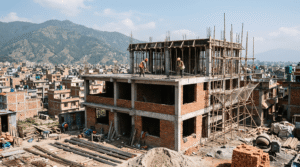
Nepal sits on one of the most seismically active zones on earth. The 2015 Gorkha earthquake killed approximately 9,000 people and damaged or destroyed more than 600,000 structures across the country. Research published by Frontiers in Built Environment showed that most of the buildings that collapsed were stone or brick masonry structures with no seismic detailing, while properly designed reinforced concrete buildings largely survived. The lesson was stark: structural design isn't optional -it's the difference between a building that stands and one that doesn't.
Nepal now has updated requirements under the Nepal National Building Code NBC 105:2020, which provides detailed seismic design guidelines applicable to all building types across the country. Any reputable architecture firm should be designing in full compliance with this code -and should be able to explain exactly how they do it.
When evaluating a firm, ask them directly: How do you approach seismic safety in your structural design? What materials do you specify, and why? Do you use BIM (Building Information Modeling) for structural analysis? A firm that can answer these questions clearly, in plain terms, is a firm that actually does the work.
Beyond seismic safety, local knowledge matters across the board -from understanding Kathmandu Valley's soil conditions and monsoon drainage patterns to navigating municipal bylaws and building permit processes that vary by district.
The Portfolio Test: How to Read a Firm's Past Work
A portfolio of beautiful renders tells you very little. What you need to see is real, completed, verifiable work.
Before trusting any firm with your project, look for projects with actual names, real locations, and measurable scale. A firm that has designed a 22,000 sq ft luxury banquet hall accommodating 2,000+ guests (like Rambagh Mahal in Lalitpur), a 15-room boutique hotel combining modern luxury with traditional Nepali hospitality (Royal Empire Boutique Hotel, Kathmandu), an outdoor event venue spanning 11 ropani of land (Harshah Batika, Lalitpur), and a premium dining destination in Baluwatar (Swoorna Kara) -is telling you something concrete about their range and capability.
You can verify these projects. You can visit them. You can speak to the clients. That transparency is what real confidence looks like.
Also look for sector diversity. A firm that has only done residential homes may struggle with the complexity of a commercial hospitality project. A firm that has delivered completed projects across luxury banquet halls, boutique hotels, nightclubs, event venues, and dining spaces demonstrates the kind of adaptability that complex, high-investment projects demand.
One important question to ask: "Can I visit a completed project and speak with the client?" The best firms will say yes without hesitation. Firms that deflect this question are telling you something too.
Why Full-Service Architecture Companies Deliver Better Outcomes
When your architect and your contractor are two different companies, the design almost always suffers. Contractors cut corners the architect never approved. Site conditions change, and nobody takes ownership of adapting the design. Budget pressure leads to substitutions that no one formally signed off on.
A full-service architecture company in Nepal that handles both design and construction eliminates this gap. The same team that drew your plans is responsible for executing them. There's no finger-pointing, no version of the design getting "lost" between desk and site.
This model also protects your timeline. When design and construction are managed by one team with one project schedule, delays in one area get caught and compensated for immediately. When they're managed by separate companies communicating through emails and meetings, delays compound -often for weeks before anyone escalates.
The design-build model isn't just more convenient. It's structurally more accountable, and that accountability directly translates into better outcomes for you.
Red Flags to Watch Out For When Hiring an Architecture Firm
Knowing what a great firm looks like is one side of the decision. Knowing what to walk away from is the other.
Watch out for firms that only show renders but have no completed projects you can visit or verify. Photorealistic 3D visualizations are easy to produce -they tell you nothing about how a firm performs under real construction conditions.
Be cautious of firms with no licensed structural engineer on staff. Architecture and structural engineering are distinct disciplines. A firm that doesn't have in-house engineering expertise is either outsourcing that work (introducing the same gap we discussed above) or skipping it entirely -which is a serious safety risk in a seismically active country like Nepal.
Avoid firms that give you vague contracts. A reputable firm will provide a detailed scope of work, a clear payment schedule, defined milestones, and explicit terms around what happens if timelines or budgets are missed.
Be alert if the firm shows no knowledge of your local municipal permit process. Every district in Nepal has specific building bylaws. A firm that hasn't done projects in your area before -and can't speak knowledgeably about local approvals -will cost you time and money.
And finally, trust your instincts about communication. If they're hard to reach during the sales process, they'll be harder to reach during construction.
What the Numbers Look Like at a Top Architecture Firm
Great architecture firms in Nepal don't just talk about quality -they can demonstrate it with tangible evidence.
Look for firms with a substantial portfolio of completed, named projects. A firm with 50+ signature projects across residential, commercial, and hospitality sectors has encountered and solved a far wider range of challenges than one with a handful of examples. That experience compounds -every problem solved on a previous project makes the next one smoother.
Client reviews are another strong signal. A firm with 700+ five-star Google reviews isn't just popular -it has consistently delivered on its promises across a large number of real clients. Reviews that mention specific project names, team members, or processes are far more reliable than generic praise.
Ask about project scale. A firm that has designed a venue covering 11 ropani of land, or a banquet hall engineered for 2,000+ guests, operates at a level of technical and logistical complexity that most smaller studios simply haven't faced.
What Makes RG Creations Nepal One of the Best Architecture Firms in Nepal
RG Creations Nepal is a full-service architecture, interior design, engineering, and construction firm headquartered in Baluwatar, Kathmandu. With over 15 years of experience and a portfolio of 50+ completed signature projects, they operate across luxury hospitality, commercial, and residential sectors throughout Nepal -from Kathmandu and Lalitpur to Pokhara, Chitwan, and Butwal.
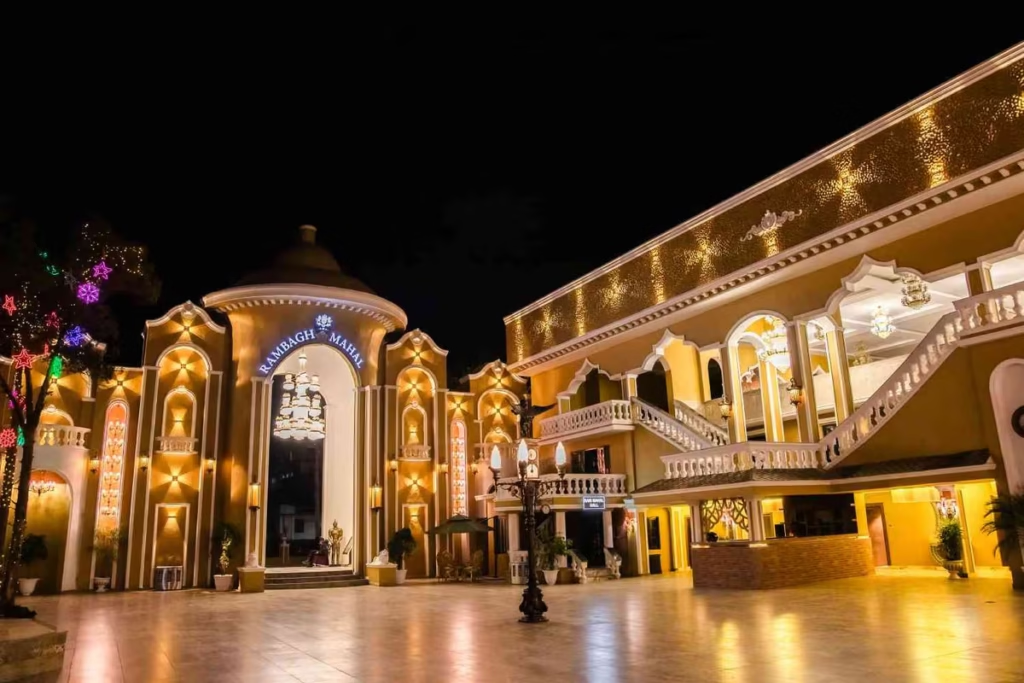
What sets RG Creations Nepal apart isn't just the scale of their work, but the nature of it. Their completed projects -Rambagh Mahal (22,000 sq ft banquet hall, Lalitpur), Majestic Grand Nepal (luxury event hall blending traditional Nepali architecture with modern amenities), Imperial Banquet Hall, Royal Empire Boutique Hotel, Harshah Batika, and Swoorna Kara -are all verifiable, named projects that clients can visit.
They bring global material sourcing and R&D capability through their international hub, Link World Tech in Shenzhen, China, meaning their clients get access to premium materials and construction innovations that aren't available through local supply chains alone.
Their architectural and interior design services cover everything from initial concept development and 3D visualization to structural engineering, permit management, and full construction -with a single team accountable from start to finish.
If you're ready to discuss your project, you can book a consultation here.
Conclusion
The best architecture firms in Nepal share a common set of qualities: they design for Nepal's seismic reality, they own the full process from design to construction, they have a portfolio of verifiable completed projects, and they communicate clearly at every stage.
Choosing the wrong firm is expensive in ways that go beyond money. It costs time, peace of mind, and sometimes the structural integrity of a building that your family will live or work in for decades.
Use the criteria in this guide to evaluate every firm you consider. Ask the hard questions. Visit completed projects. Verify the claims.
And when you find a firm that answers every question with confidence and evidence -that's the right partner for your project.
Frequently Asked Questions
What is the best architecture firm in Nepal in 2026?
The best architecture firm in Nepal is one that combines seismic-safe structural design, a full-service model covering both design and construction, and a verified portfolio of completed projects across multiple sectors. RG Creations Nepal is widely regarded as one of the leading firms in this space, with 15+ years of experience, 50+ completed projects, and over 700 five-star Google reviews from real clients across Nepal.
How much does it cost to hire an architecture firm in Nepal?
Costs vary significantly depending on project type, scope, and location. Residential architecture projects in Nepal typically involve a design fee calculated as a percentage of total construction cost, usually ranging from 5% to 15% depending on the complexity and level of service. Full-service firms that handle both design and construction often provide better value because a single contract eliminates the cost overlaps and delays that come from managing separate design and build parties.
What's the difference between an architecture firm and a construction company in Nepal?
An architecture firm focuses on design, planning, and project documentation. A construction company executes the build on site. Many projects in Nepal engage these separately, which can create communication gaps and accountability problems. A full-service company in Nepal -like RG Creations -handles both under one roof, meaning the team responsible for the design is also responsible for delivering it correctly on site.
How do I verify if an architecture firm is registered in Nepal?
Architecture firms in Nepal should be registered with the Department of Urban Development and Building Construction (DUDBC) under the Government of Nepal. Licensed architects are registered with the Nepal Engineers Association (NEA) or the Council of Architecture. Always ask a firm for their registration details and verify them before signing any agreement.
Can an architecture firm handle both design and construction in Nepal?
Yes, and the best firms do. A design-build firm manages both the architectural design and the physical construction of your project. This model reduces miscommunication, protects your budget, and gives you a single point of accountability across the entire project. When evaluating firms in Nepal, asking whether they offer integrated design and construction services is one of the most important questions you can ask.