When building or remodeling a home, most homeowners spend hours scrolling through Pinterest looking at color palettes, throw pillows, and luxury sofas. However, true high-end design isn't found in retail showrooms. It is baked directly into the structural architecture of the house.
Table of Contents
In Nepal, creating a luxury living space presents unique architectural challenges. Because structural engineering codes require robust beams and heavy pillars to withstand seismic activity, standard open-concept layouts can easily feel interrupted or boxy. To bypass these limitations, top designers approach home interior design from a structural framework first.
At RG Creations Nepal, our philosophy is anchored where timeless luxury, classic charm, and modern vision converge. Whether you are designing massive, government-approved commercial complexes or highly intimate private custom villas, our process remains identical: we engineer luxury from the bones up. These seven structural secrets, drawn directly from our 15-year portfolio of landmark builds across the country, will transform your main living space into a balanced, world-class sanctuary.
1. The Integrated Architectural Media Wall
Moving past simple television stands or basic plasterboard backings is the first step to elevating your room. A modern luxury lounge requires a fully integrated media feature wall that serves as the room's anchor point.
Instead of treating the television as an afterthought, master-level interior design for living room spaces uses full-height architectural panels. In our premium residential portfolio across Kathmandu, we favor layering floor-to-ceiling wooden louvers with book-matched Italian marble slabs or custom stone paneling. This structural build completely conceals all electrical conduits, media nodes, and mounting brackets behind the finish, keeping your sightlines pristine and clutter-free.
2. Disguising Structural Column and Beam Frameworks
Nepal's strict civil construction guidelines mean that concrete pillars and deep downstand beams often cut awkwardly into residential floor plans. A novice decorator simply covers them in paint; a professional interior design home specialist fully integrates them into the room's lifestyle layout.
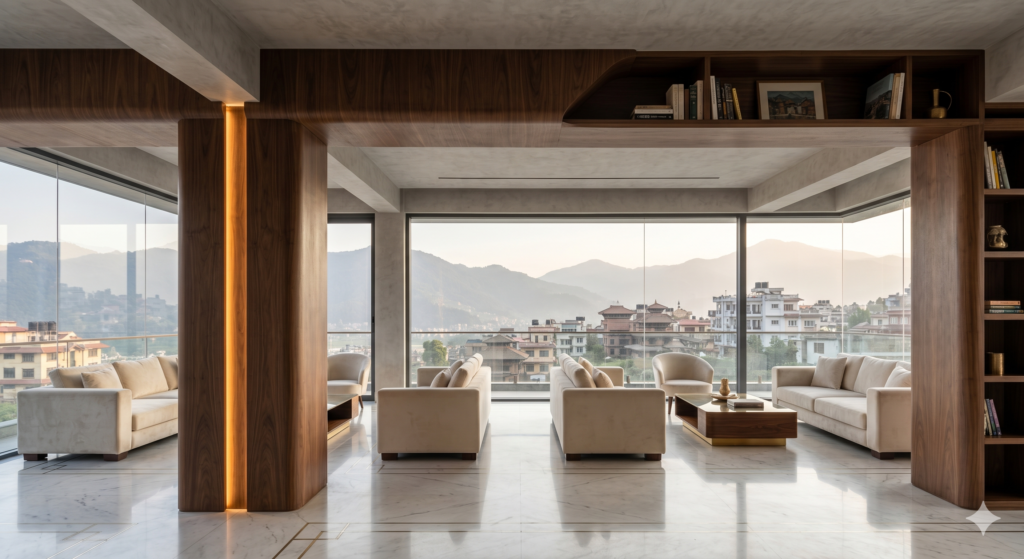
Our design team tackles this by scaling down the monumental structural engineering principles we apply to massive event venues. For instance, when we engineered the Shivalaya Kunj Event Venue Hall in Basundhara, we faced a compact 10,000 sq. ft. urban footprint that demanded innovative spatial verticality. We apply that same spatial math to residential homes. Structural columns can be wrapped in seamless premium timber veneers or custom micro-cement finishes to transform them into deliberate design pillars, while low downstand beams are easily framed with asymmetrical wooden wraps or tied into tailored architectural shelving.
3. Multi-Tiered Layered False Ceiling Heights
A flat plaster ceiling can make even a massive lounge feel uninspired. Elevating the interior design of living room environments requires playing with different ceiling drops and recess depths to define distinct zones within an open layout.
| Ceiling Component | Structural Purpose | Visual Impact |
| Deep Perimeter Drops | Conceals central AC ducts and heavy motorized curtain tracks | Frames the room cleanly |
| Central Raised Bays | Maximizes the vertical room height | Creates an airy, expansive feeling |
| Hidden Cove Channels | Houses indirect LED profile strips | Eliminates harsh glares |
When designing the neoclassical grandeur of the 19,000 sq. ft. Ramalaya Event Venue Hall in Bansbari, our multi-tiered ceiling architecture was key to mapping out the sprawling luxury. In a residential setting, these same structural drops allow us to map out distinct zones, like separating your main sitting lounge from your dining area, without ever needing to erect dark, restrictive walls.
4. Symmetrical Flooring Transition Mapping
True luxury is felt right under your feet. When working on high-end residential layouts, the mapping of your flooring material dictates the flow of the entire floor plan.
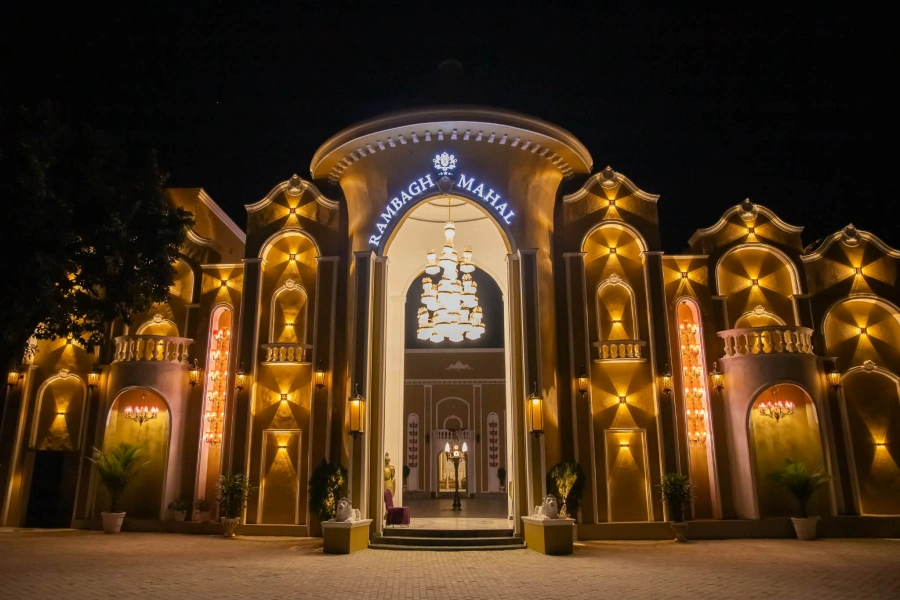
If you are using large-format porcelain tiles or premium marble, the layout must be mapped symmetrically from the center of the room outward. This ensures that no awkward, mismatched tile slices appear against your focal walls. Drawing from the grand, expansive flooring layouts of our flagship projects like Rambagh Mahal and Majestic Grand Nepal, we design flush, completely seamless residential transitions where a plush marble sitting area meets an engineered hardwood dining zone, ensuring the material thresholds run perfectly parallel to your primary structural lines.
5. Floating Furniture Configurations
One of the most common mistakes in interior design in Kathmandu is pushing all seating arrangements directly against the walls. This leaves an empty, uninviting dead space right in the center of the room.
To establish true scale and classic charm, plan your layout around a "floating" configuration. Pull your main sofas, accent lounge chairs, and custom coffee tables away from the walls, allowing clear, fluid walking paths completely around the seating zone. We use this exact methodology when designing high-end hospitality layouts, such as the tranquil, luxury guest configurations at the Royal Empire Boutique Hotel, creating an intimate, deeply comfortable conversational environment right in your home.
6. Concealed Mechanical, Electrical & Plumbing (MEP)
Nothing breaks the visual flow of a gorgeous space faster than exposed wire bundles, bulky air conditioning cassettes, or poorly placed switchboards.
Our extensive background in designing elite, high-intensity entertainment hubs, such as Victory Club and Deja Vu Club, has made our team experts at managing complex acoustic and mechanical infrastructure invisible to the naked eye. During the initial structural phase of your home, we ensure that all home automation nodes, audio speaker lines, and HVAC copper pipes are mapped directly inside the wall chases or false ceiling voids. By integrating linear slot diffusers cleanly into the drop ceilings rather than using standard wall-mounted plastic AC units, the entire climate control system blends invisibly into the room's architecture.
7. Biophilic Light Pockets
Maximizing natural light is critical for health, mood, and spatial perception. In dense urban areas across the Kathmandu Valley, neighboring buildings can block valuable afternoon sun.
By engineering structural light pockets, such as floor-to-ceiling corner glass windows, structural skylights, or recessed indoor planter cutouts directly beneath architectural light shafts, you invite the outdoors inside. Much like the balanced harmony of high-end open-air architecture found in properties like Sangam Batika, these residential light pockets naturally illuminate raw textures like stone wall cladding or rich wood panels, creating a dynamic interior environment that shifts beautifully from morning to dusk.
Bringing Your Vision to Life with RG Creations Nepal
Executing a flawless, structurally sound living space requires an experienced team that bridges the gap between raw civil engineering and premium interior craftsmanship. If you are ready to transform your residential project into a striking, future-proof asset, partnering with an established, full-service interior design company in nepal ensures your home is built to uncompromised international standards from day one.
Elevate your everyday living. Connect with RG Creations Nepal, the leading full-service architecture and interior design studio in Kathmandu, to bring uncompromised international standards to your residential space.
Get in Touch with Our Design Team →
Frequently Asked Questions (FAQ)
How do you handle prominent structural pillars and beams in a living room layout?
Instead of trying to hide concrete columns with paint, a professional team integrates them directly into the interior architecture. Pillars can be wrapped in premium timber veneers or custom micro-cement finishes to transform them into deliberate design columns. Low downstand beams can be framed with asymmetrical wooden ceiling wraps or incorporated into tailored architectural shelving to make the structural necessity look entirely intentional. This is a technique we scale down from our massive commercial builds, such as Shivalaya Kunj Event Venue Hall, to apply directly to private custom villas.
What is the ideal false ceiling design for a modern living room in Nepal?
The perfect false ceiling should use a multi-tiered layer approach rather than a single flat sheet of plasterboard. We recommend designing deep perimeter drops along the edges to hide central air conditioning ducts and motorized curtain tracks cleanly. This leaves a raised central bay that maximizes the vertical height of the room, creating an expansive, airy feeling. Hidden cove channels should be cut into these tiers to house indirect LED profile strips, which completely eliminates harsh light glares.
Why is a floating furniture configuration better for a luxury lounge layout?
Pushing all your sofas and seating arrangements flush against the walls is a common mistake that leaves an empty, dead space right in the middle of your room. A floating configuration pulls the main sofas and accent lounge chairs away from the walls, creating clear, fluid walking paths all the way around the main seating zone. This setup establishes a distinct sense of scale and conversational warmth, mimicking the sophisticated atmosphere of an elite boutique hotel lounge.
How do I manage smooth flooring transitions in an open-concept living and dining area?
To achieve a high-end look, your flooring must be mapped symmetrically from the center of the room outward to ensure no awkward, mismatched tile slices appear against your focal walls. When transitioning between two different premium materials, such as a plush marble sitting area meeting an engineered hardwood dining zone, the material thresholds must be perfectly flush and seamless. Drawing inspiration from our grand hospitality designs at Rambagh Mahal and Majestic Grand Nepal, keeping these transitions parallel to your primary structural lines maintains a clean visual flow.
Why should I choose a turnkey interior design company in Nepal instead of hiring individual day-labor contractors?
Hiring separate contractors often leads to massive communication gaps where your electrical lines, false ceiling drops, and custom furniture dimensions do not align correctly. A full-service, turnkey architecture and interior design studio manages your entire project from initial 3D visualization through structural civil engineering to final premium handover. This end to end management guarantees that your luxury residence is built to uncompromised international standards without unexpected budget overruns or construction delays.